Menus
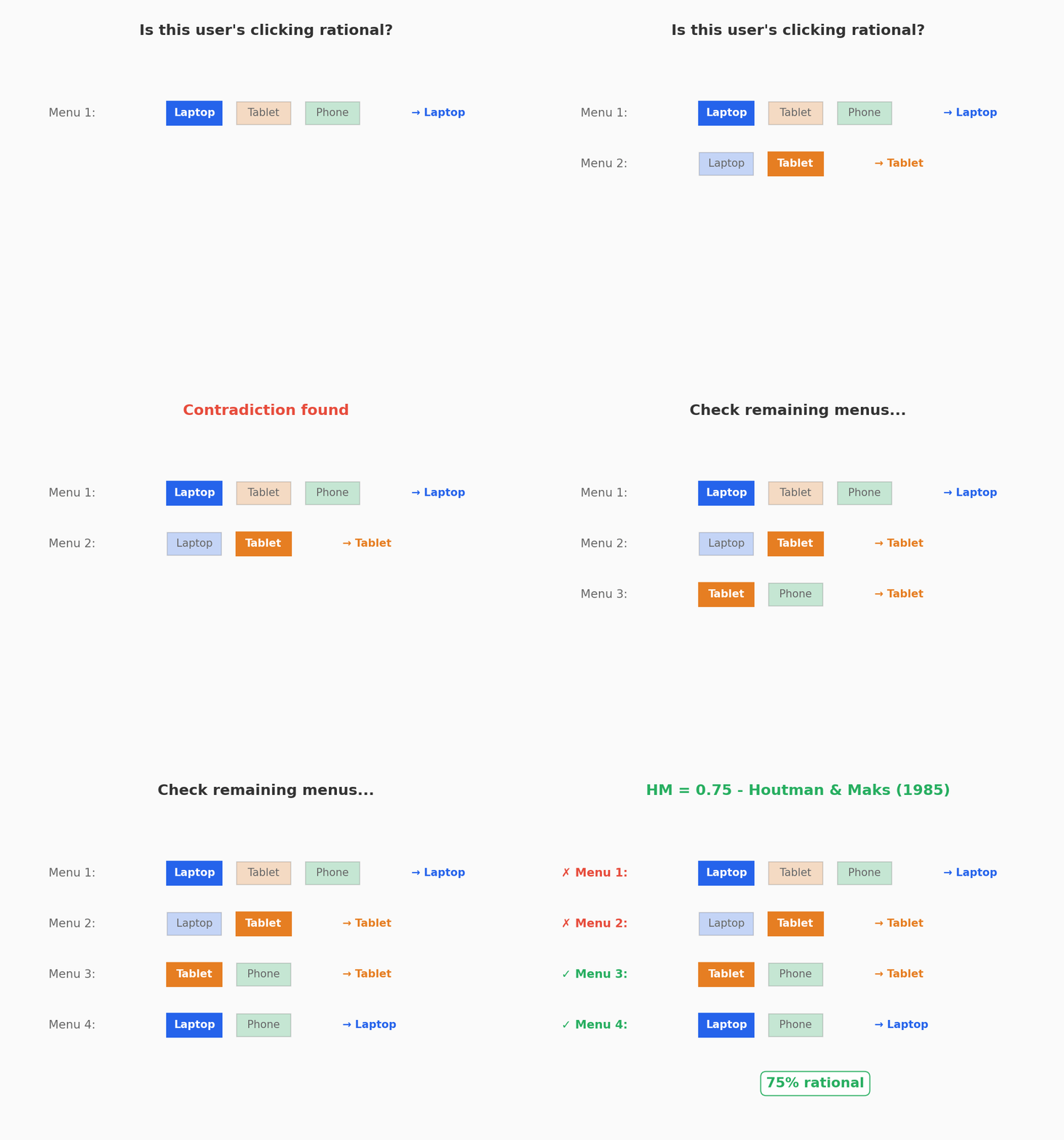
Menu choices. HM counts how many choices to discard to restore consistency.
Menu analysis tests whether choices from finite sets follow a stable ranking. There are no prices or budgets. The input is a sequence of menus paired with whichever option was picked from each one.
|
|
|
Subtype |
Input Class |
Description |
|---|---|---|
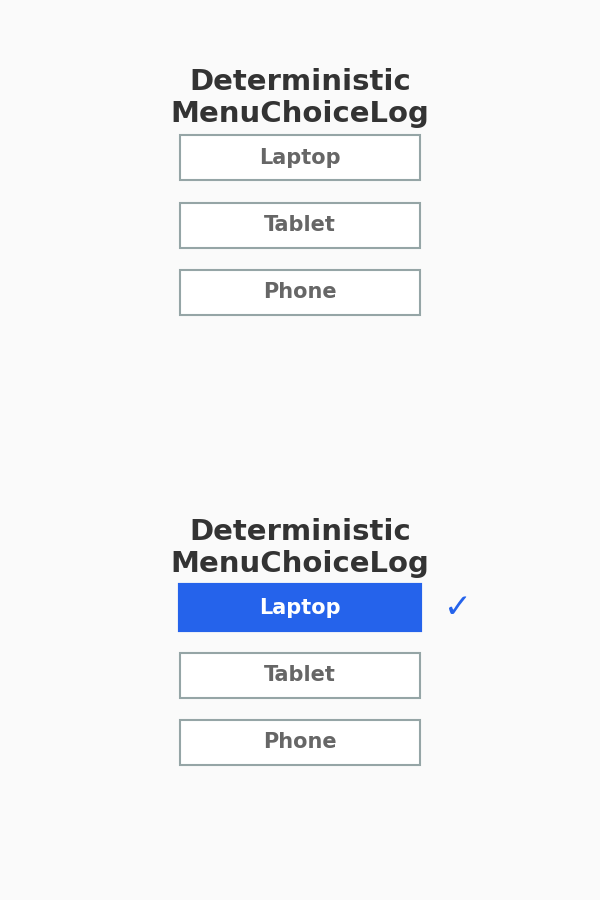
Deterministic |
|
menus → single choices (e.g., which product was clicked) |
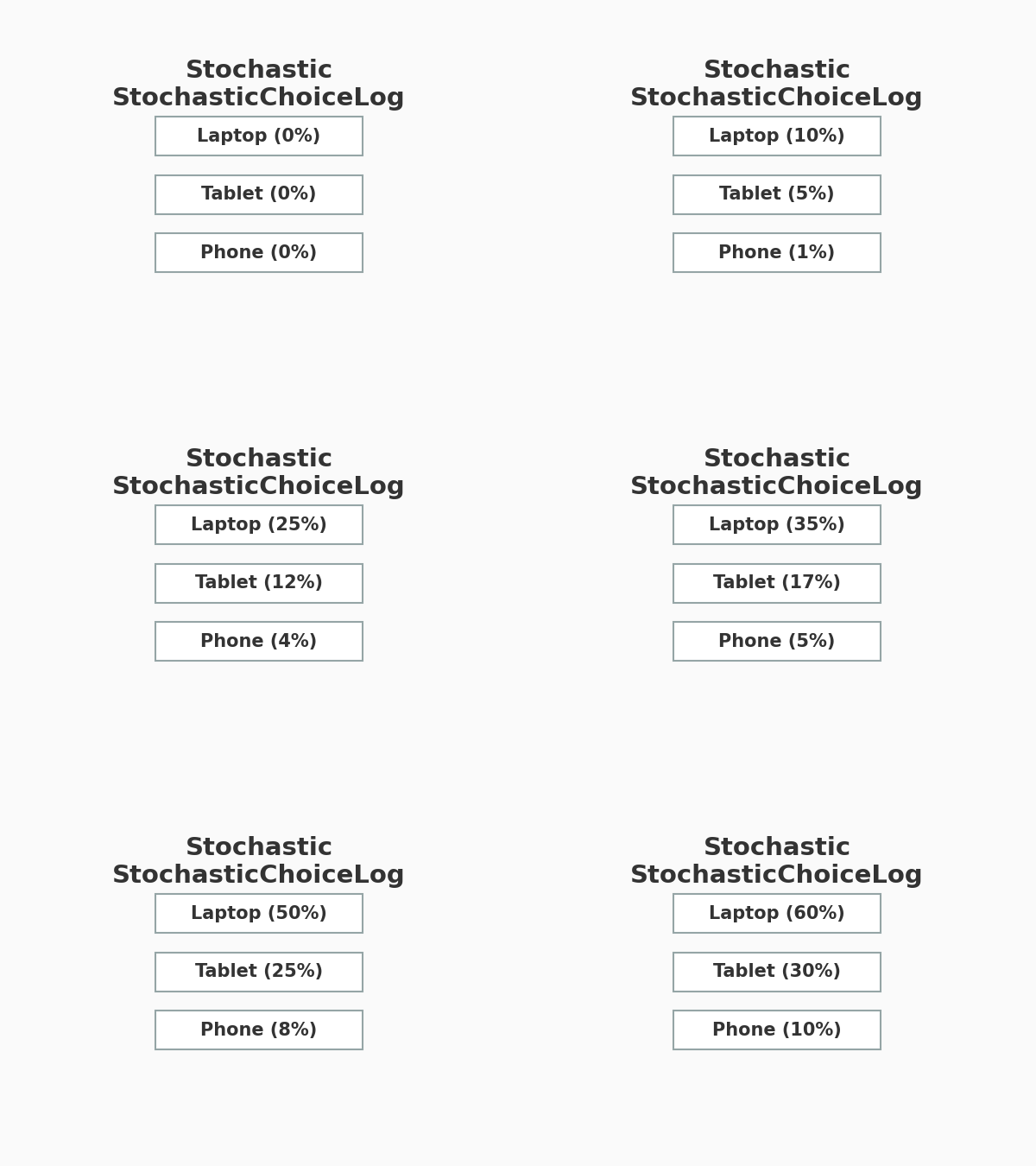
Stochastic |
|
menus → choice frequencies (e.g., 60% A, 30% B, 10% C) |
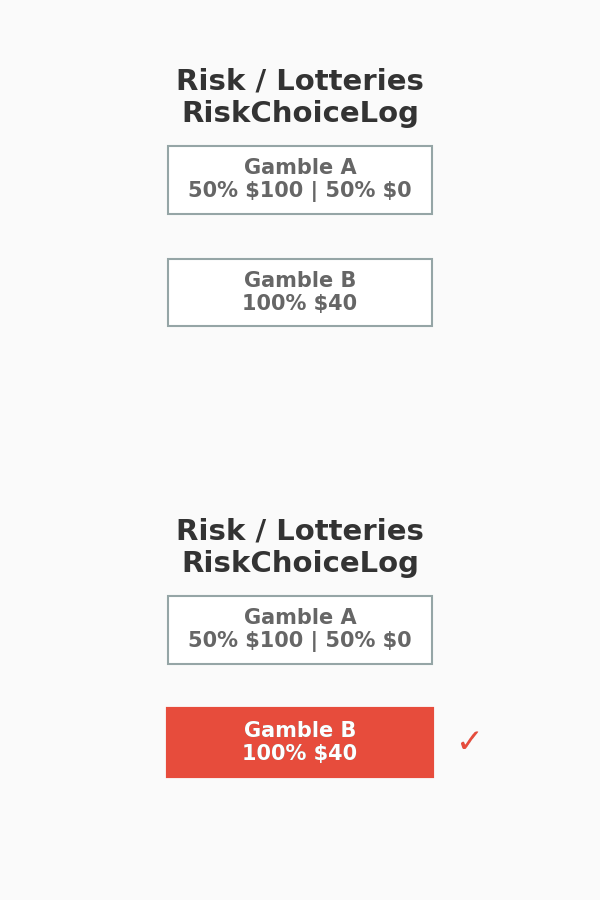
Risk / Lotteries |
|
lotteries → choices (e.g., gamble A vs gamble B) |
from prefgraph import MenuChoiceLog, validate_menu_sarp, compute_menu_efficiency

# 4 observations: each menu is a set of item indices, choice is which was picked
log = MenuChoiceLog(
    menus=[
        frozenset({0, 1, 2}),   # menu 1: {Pizza, Burger, Salad}
        frozenset({1, 2, 3}),   # menu 2: {Burger, Salad, Pasta}
        frozenset({0, 3}),      # menu 3: {Pizza, Pasta}
        frozenset({0, 1, 3}),   # menu 4: {Pizza, Burger, Pasta}
    ],
    choices=[0, 1, 0, 0],      # picked Pizza, Burger, Pizza, Pizza
    item_labels=["Pizza", "Burger", "Salad", "Pasta"],
)
# SARP: are there any preference cycles? (stricter than WARP)
sarp = validate_menu_sarp(log)
# HM: fraction of choices consistent with a single ranking
hm = compute_menu_efficiency(log)
print(f"SARP consistent: {sarp.is_consistent}")
print(f"HM efficiency: {hm.efficiency_index:.2f}")
SARP consistent: True
HM efficiency: 1.00
Deterministic data feeds directly into Engine.analyze_menus() for batch Rust processing. Stochastic and risk data use the per-user Functions API because their inputs do not map to the tuple format the batch engine expects. The axioms and scores are identical across paths.
Theory
Read these in order from the dedicated Theory section:
Abstract choice - WARP, SARP, congruence, and ordinal utility.
Stochastic choice - RUM, RAM, IIA, and regularity.
Limited attention - consideration sets, attention filters, and overload.